Meaning
to hatch, harbour
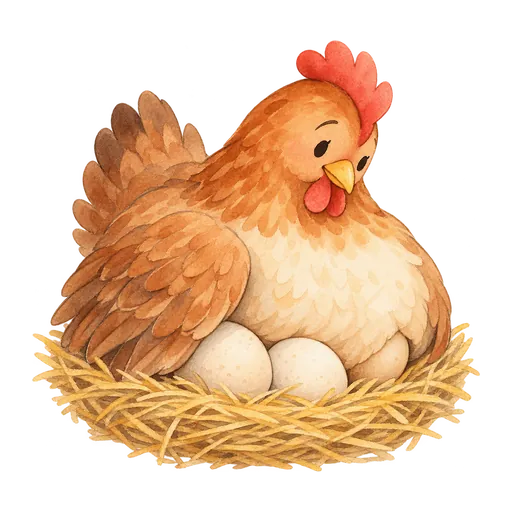
- to sit on eggs to warm and hatch them
- to harbour or nurture an intense feeling secretly (e.g. anger, revenge)
- to be incubating or coming down with an illness
In a sentence
La gallina cova le sue uova nel fienile da due settimane.
The hen has been sitting on her eggs in the barn for two weeks.
Sentivo brividi e stanchezza da giorni: stavo covando una brutta influenza.
I had been feeling chills and fatigue for days: I was coming down with a bad flu.
Non fa bene alla salute covare tanta rabbia repressa per anni.
It is not good for your health to harbour so much suppressed anger for years.
Word forms (48)
| Word | Word forms |
|---|---|
| covare | infinitive |
| covo | indicative · present · singular · 1st person |
| covi | indicative · present · singular · 2nd person |
| cova | indicative · present · singular · 3rd person |
| coviamo | indicative · present · plural · 1st person |
| covate | indicative · present · plural · 2nd person |
| covano | indicative · present · plural · 3rd person |
| covavo | indicative · imperfect · singular · 1st person |
| covavi | indicative · imperfect · singular · 2nd person |
| covava | indicative · imperfect · singular · 3rd person |
| covavamo | indicative · imperfect · plural · 1st person |
| covavate | indicative · imperfect · plural · 2nd person |
| covavano | indicative · imperfect · plural · 3rd person |
| covai | indicative · past · singular · 1st person |
| covasti | indicative · past · singular · 2nd person |
| covò | indicative · past · singular · 3rd person |
| covammo | indicative · past · plural · 1st person |
| covaste | indicative · past · plural · 2nd person |
| covarono | indicative · past · plural · 3rd person |
| coverò | indicative · future · singular · 1st person |
| coverai | indicative · future · singular · 2nd person |
| coverà | indicative · future · singular · 3rd person |
| coveremo | indicative · future · plural · 1st person |
| coverete | indicative · future · plural · 2nd person |
| coveranno | indicative · future · plural · 3rd person |
| covi | subjunctive · present · singular · 1st person |
| covi | subjunctive · present · singular · 2nd person |
| covi | subjunctive · present · singular · 3rd person |
| coviamo | subjunctive · present · plural · 1st person |
| coviate | subjunctive · present · plural · 2nd person |
| covino | subjunctive · present · plural · 3rd person |
| covassi | subjunctive · imperfect · singular · 1st person |
| covassi | subjunctive · imperfect · singular · 2nd person |
| covasse | subjunctive · imperfect · singular · 3rd person |
| covassimo | subjunctive · imperfect · plural · 1st person |
| covaste | subjunctive · imperfect · plural · 2nd person |
| covassero | subjunctive · imperfect · plural · 3rd person |
| coverei | conditional · present · singular · 1st person |
| coveresti | conditional · present · singular · 2nd person |
| coverebbe | conditional · present · singular · 3rd person |
| coveremmo | conditional · present · plural · 1st person |
| covereste | conditional · present · plural · 2nd person |
| coverebbero | conditional · present · plural · 3rd person |
| cova | imperative · singular · 2nd person |
| coviamo | imperative · plural · 1st person |
| covate | imperative · plural · 2nd person |
| covando | gerund |
| covato | past · participle |
Usage notes
- Metaphorically common in 'covare rancore' (to harbour resentment) or 'covare un'influenza' (to brew the flu).