Meaning
to tie, to bind
- to connect, to link
- to bond, to get along
- to alloy
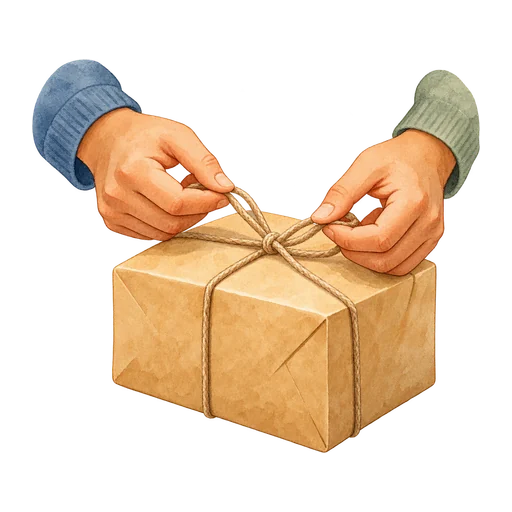
In a sentence
Puoi legare bene il sacchetto, per favore?
Can you tie the bag well, please?
Quel ricordo ci lega ancora oggi.
That memory still binds us today.
Ho legato le chiavi allo zaino.
I tied the keys to the backpack.
Word forms (48)
| Word | Word forms |
|---|---|
| legare | infinitive |
| leghiamo | indicative · present · plural · 1st person |
| lego | indicative · present · singular · 1st person |
| legate | indicative · present · plural · 2nd person |
| leghi | indicative · present · singular · 2nd person |
| legano | indicative · present · plural · 3rd person |
| lega | indicative · present · singular · 3rd person |
| legavamo | indicative · imperfect · plural · 1st person |
| legavo | indicative · imperfect · singular · 1st person |
| legavate | indicative · imperfect · plural · 2nd person |
| legavi | indicative · imperfect · singular · 2nd person |
| legavano | indicative · imperfect · plural · 3rd person |
| legava | indicative · imperfect · singular · 3rd person |
| legammo | indicative · past · plural · 1st person |
| legai | indicative · past · singular · 1st person |
| legaste | indicative · past · plural · 2nd person |
| legasti | indicative · past · singular · 2nd person |
| legarono | indicative · past · plural · 3rd person |
| legò | indicative · past · singular · 3rd person |
| legheremo | indicative · future · plural · 1st person |
| legherò | indicative · future · singular · 1st person |
| legherete | indicative · future · plural · 2nd person |
| legherai | indicative · future · singular · 2nd person |
| legheranno | indicative · future · plural · 3rd person |
| legherà | indicative · future · singular · 3rd person |
| leghiamo | subjunctive · present · plural · 1st person |
| leghi | subjunctive · present · singular · 1st person |
| leghiate | subjunctive · present · plural · 2nd person |
| leghi | subjunctive · present · singular · 2nd person |
| leghino | subjunctive · present · plural · 3rd person |
| leghi | subjunctive · present · singular · 3rd person |
| legassimo | subjunctive · imperfect · plural · 1st person |
| legassi | subjunctive · imperfect · singular · 1st person |
| legaste | subjunctive · imperfect · plural · 2nd person |
| legassi | subjunctive · imperfect · singular · 2nd person |
| legassero | subjunctive · imperfect · plural · 3rd person |
| legasse | subjunctive · imperfect · singular · 3rd person |
| legheremmo | conditional · present · plural · 1st person |
| legherei | conditional · present · singular · 1st person |
| leghereste | conditional · present · plural · 2nd person |
| legheresti | conditional · present · singular · 2nd person |
| legherebbero | conditional · present · plural · 3rd person |
| legherebbe | conditional · present · singular · 3rd person |
| leghiamo | imperative · plural · 1st person |
| legate | imperative · plural · 2nd person |
| lega | imperative · singular · 2nd person |
| legando | gerund |
| legato | past · participle |
Usage notes
- Use 'legare' for physical ties (ropes, bonds) or abstract connections (emotions, ideas). 'Collegare' is better for logical links (e.g., ideas, devices).
- Common mistake: Overusing 'legare' for 'to tie' in cooking. Italians say 'annodare' for tying knots or 'legare' only if binding ingredients (e.g., meat).
- Auxiliary: 'Avere' for transitive uses (ho legato), 'essere' for intransitive/reflexive (mi sono legato).