Meaning
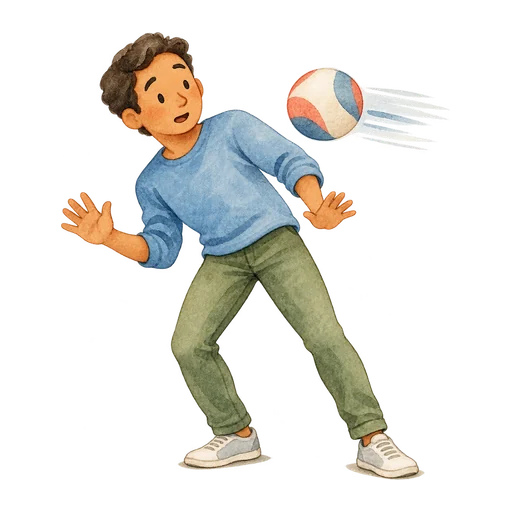
to dodge, avoid
- To dodge or duck to avoid a physical blow or obstacle.
- To evade or steer clear of an unpleasant task, person, or responsibility.
In a sentence
Il pugile è riuscito a schivare il pugno all'ultimo secondo.
The boxer managed to dodge the punch at the last second.
Cerca sempre di schivare i turni di notte quando organizza gli orari.
He always tries to avoid night shifts when scheduling.
Come hai fatto a schivare quell'auto che veniva contromano?
How did you manage to dodge that car coming the wrong way?
Word forms (48)
| Word | Word forms |
|---|---|
| schivare | infinitive |
| schivo | indicative · present · singular · 1st person |
| schivi | indicative · present · singular · 2nd person |
| schiva | indicative · present · singular · 3rd person |
| schiviamo | indicative · present · plural · 1st person |
| schivate | indicative · present · plural · 2nd person |
| schivano | indicative · present · plural · 3rd person |
| schivavo | indicative · imperfect · singular · 1st person |
| schivavi | indicative · imperfect · singular · 2nd person |
| schivava | indicative · imperfect · singular · 3rd person |
| schivavamo | indicative · imperfect · plural · 1st person |
| schivavate | indicative · imperfect · plural · 2nd person |
| schivavano | indicative · imperfect · plural · 3rd person |
| schivai | indicative · past · singular · 1st person |
| schivasti | indicative · past · singular · 2nd person |
| schivò | indicative · past · singular · 3rd person |
| schivammo | indicative · past · plural · 1st person |
| schivaste | indicative · past · plural · 2nd person |
| schivarono | indicative · past · plural · 3rd person |
| schiverò | indicative · future · singular · 1st person |
| schiverai | indicative · future · singular · 2nd person |
| schiverà | indicative · future · singular · 3rd person |
| schiveremo | indicative · future · plural · 1st person |
| schiverete | indicative · future · plural · 2nd person |
| schiveranno | indicative · future · plural · 3rd person |
| schivi | subjunctive · present · singular · 1st person |
| schivi | subjunctive · present · singular · 2nd person |
| schivi | subjunctive · present · singular · 3rd person |
| schiviamo | subjunctive · present · plural · 1st person |
| schiviate | subjunctive · present · plural · 2nd person |
| schivino | subjunctive · present · plural · 3rd person |
| schivassi | subjunctive · imperfect · singular · 1st person |
| schivassi | subjunctive · imperfect · singular · 2nd person |
| schivasse | subjunctive · imperfect · singular · 3rd person |
| schivassimo | subjunctive · imperfect · plural · 1st person |
| schivaste | subjunctive · imperfect · plural · 2nd person |
| schivassero | subjunctive · imperfect · plural · 3rd person |
| schiverei | conditional · present · singular · 1st person |
| schiveresti | conditional · present · singular · 2nd person |
| schiverebbe | conditional · present · singular · 3rd person |
| schiveremmo | conditional · present · plural · 1st person |
| schivereste | conditional · present · plural · 2nd person |
| schiverebbero | conditional · present · plural · 3rd person |
| schiva | imperative · singular · 2nd person |
| schiviamo | imperative · plural · 1st person |
| schivate | imperative · plural · 2nd person |
| schivando | gerund |
| schivato | past · participle |
Usage notes
- Takes 'avere' in compound tenses.
- More concrete and physical than 'evitare', though often used figuratively too.