Meaning
to stay, be
- to stay, remain
- to be, feel (health or condition)
- to be doing something (present continuous)
- to be about to
In a sentence
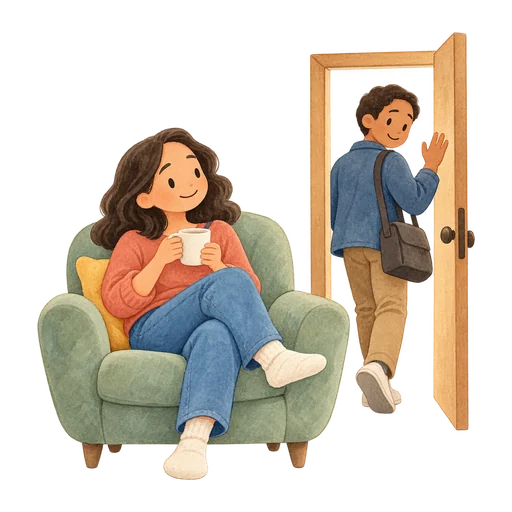
Stasera resto a casa, voglio stare tranquillo.
Tonight I'm staying home; I want to relax.
Che stai facendo in cucina a quest'ora?
What are you doing in the kitchen at this hour?
Questo libro non sta nello zaino piccolo.
This book doesn't fit in the small backpack.
Word forms (48)
| Word | Word forms |
|---|---|
| stare | infinitive |
| stiamo | indicative · present · plural · 1st person |
| sto | indicative · present · singular · 1st person |
| state | indicative · present · plural · 2nd person |
| stai | indicative · present · singular · 2nd person |
| stanno | indicative · present · plural · 3rd person |
| sta | indicative · present · singular · 3rd person |
| stavamo | indicative · imperfect · plural · 1st person |
| stavo | indicative · imperfect · singular · 1st person |
| stavate | indicative · imperfect · plural · 2nd person |
| stavi | indicative · imperfect · singular · 2nd person |
| stavano | indicative · imperfect · plural · 3rd person |
| stava | indicative · imperfect · singular · 3rd person |
| stemmo | indicative · past · plural · 1st person |
| stetti | indicative · past · singular · 1st person |
| steste | indicative · past · plural · 2nd person |
| stesti | indicative · past · singular · 2nd person |
| stettero | indicative · past · plural · 3rd person |
| stette | indicative · past · singular · 3rd person |
| staremo | indicative · future · plural · 1st person |
| starò | indicative · future · singular · 1st person |
| starete | indicative · future · plural · 2nd person |
| starai | indicative · future · singular · 2nd person |
| staranno | indicative · future · plural · 3rd person |
| starà | indicative · future · singular · 3rd person |
| stiamo | subjunctive · present · plural · 1st person |
| stia | subjunctive · present · singular · 1st person |
| stiate | subjunctive · present · plural · 2nd person |
| stia | subjunctive · present · singular · 2nd person |
| stiano | subjunctive · present · plural · 3rd person |
| stia | subjunctive · present · singular · 3rd person |
| stessimo | subjunctive · imperfect · plural · 1st person |
| stessi | subjunctive · imperfect · singular · 1st person |
| steste | subjunctive · imperfect · plural · 2nd person |
| stessi | subjunctive · imperfect · singular · 2nd person |
| stessero | subjunctive · imperfect · plural · 3rd person |
| stesse | subjunctive · imperfect · singular · 3rd person |
| staremmo | conditional · present · plural · 1st person |
| starei | conditional · present · singular · 1st person |
| stareste | conditional · present · plural · 2nd person |
| staresti | conditional · present · singular · 2nd person |
| starebbero | conditional · present · plural · 3rd person |
| starebbe | conditional · present · singular · 3rd person |
| stiamo | imperative · plural · 1st person |
| state | imperative · plural · 2nd person |
| stai | imperative · singular · 2nd person |
| stando | gerund |
| stato | past · participle |
Usage notes
- Use 'stare' for temporary states/actions; 'essere' for permanent traits (e.g., 'sto male' vs. 'sono malato').
- In present continuous, 'stare' + gerund (-ando/-endo) is mandatory—never omit it like in English.
- 'Stare per' + infinitive means 'about to'; don’t confuse with 'essere per' (less common, more formal).
- present: sto, stai, sta, stiamo, state, stanno