Significado
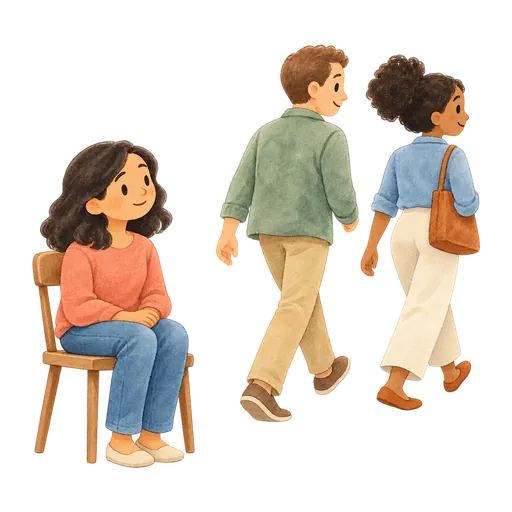
to stay; remain
- to be left; remain
- to remain; continue to be
En una frase
Stasera resto a casa con mia sorella.
Tonight I'm staying home with my sister.
Quanti biscotti sono restati nel pacco?
How many cookies were left in the package?
Dopo la corsa, sono rimasto a casa.
After the run, I stayed at home.
Formas de la palabra (48)
| Palabra | Formas de la palabra |
|---|---|
| restare | infinitive |
| restiamo | indicative · present · plural · 1st person |
| resto | indicative · present · singular · 1st person |
| restate | indicative · present · plural · 2nd person |
| resti | indicative · present · singular · 2nd person |
| restano | indicative · present · plural · 3rd person |
| resta | indicative · present · singular · 3rd person |
| restavamo | indicative · imperfect · plural · 1st person |
| restavo | indicative · imperfect · singular · 1st person |
| restavate | indicative · imperfect · plural · 2nd person |
| restavi | indicative · imperfect · singular · 2nd person |
| restavano | indicative · imperfect · plural · 3rd person |
| restava | indicative · imperfect · singular · 3rd person |
| restammo | indicative · past · plural · 1st person |
| restai | indicative · past · singular · 1st person |
| restaste | indicative · past · plural · 2nd person |
| restasti | indicative · past · singular · 2nd person |
| restarono | indicative · past · plural · 3rd person |
| restò | indicative · past · singular · 3rd person |
| resteremo | indicative · future · plural · 1st person |
| resterò | indicative · future · singular · 1st person |
| resterete | indicative · future · plural · 2nd person |
| resterai | indicative · future · singular · 2nd person |
| resteranno | indicative · future · plural · 3rd person |
| resterà | indicative · future · singular · 3rd person |
| restiamo | subjunctive · present · plural · 1st person |
| resti | subjunctive · present · singular · 1st person |
| restiate | subjunctive · present · plural · 2nd person |
| resti | subjunctive · present · singular · 2nd person |
| restino | subjunctive · present · plural · 3rd person |
| resti | subjunctive · present · singular · 3rd person |
| restassimo | subjunctive · imperfect · plural · 1st person |
| restassi | subjunctive · imperfect · singular · 1st person |
| restaste | subjunctive · imperfect · plural · 2nd person |
| restassi | subjunctive · imperfect · singular · 2nd person |
| restassero | subjunctive · imperfect · plural · 3rd person |
| restasse | subjunctive · imperfect · singular · 3rd person |
| resteremmo | conditional · present · plural · 1st person |
| resterei | conditional · present · singular · 1st person |
| restereste | conditional · present · plural · 2nd person |
| resteresti | conditional · present · singular · 2nd person |
| resterebbero | conditional · present · plural · 3rd person |
| resterebbe | conditional · present · singular · 3rd person |
| restiamo | imperative · plural · 1st person |
| restate | imperative · plural · 2nd person |
| resta | imperative · singular · 2nd person |
| restando | gerund |
| restato | past · participle |
Notas de uso
- Use 'restare' for staying in a place; 'rimanere' is more emotional or permanent (e.g., 'rimanere solo').
- In compound tenses, 'restare' takes 'essere' as auxiliary (e.g., 'sono restato').
- Avoid confusing 'restare' with 'smettere' (to stop an action); 'restare' implies continuation.