Significado
to be silent, to keep quiet
- to quiet down, to shut up
- to keep mum, to refuse to reveal information
- to cease, to stop
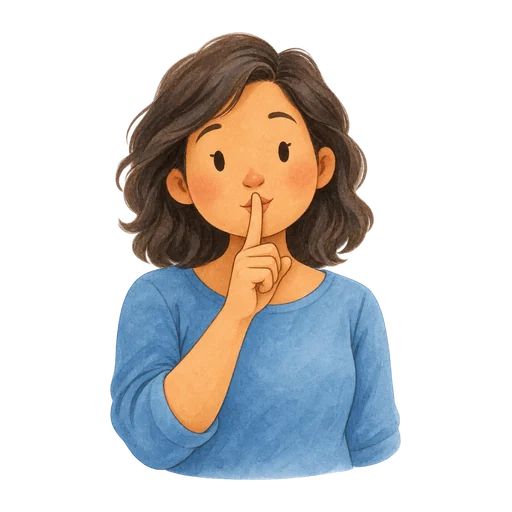
En una frase
Perché taci proprio adesso?
Why are you silent right now?
Ti prego, taci un minuto.
Please, be quiet for a minute.
Ha taciuto tutto alla sua amica.
She kept everything from her friend.
Formas de la palabra (48)
| Palabra | Formas de la palabra |
|---|---|
| tacere | infinitive |
| tacciamo | indicative · present · plural · 1st person |
| taccio | indicative · present · singular · 1st person |
| tacete | indicative · present · plural · 2nd person |
| taci | indicative · present · singular · 2nd person |
| tacciono | indicative · present · plural · 3rd person |
| tace | indicative · present · singular · 3rd person |
| tacevamo | indicative · imperfect · plural · 1st person |
| tacevo | indicative · imperfect · singular · 1st person |
| tacevate | indicative · imperfect · plural · 2nd person |
| tacevi | indicative · imperfect · singular · 2nd person |
| tacevano | indicative · imperfect · plural · 3rd person |
| taceva | indicative · imperfect · singular · 3rd person |
| tacemmo | indicative · past · plural · 1st person |
| tacqui | indicative · past · singular · 1st person |
| taceste | indicative · past · plural · 2nd person |
| tacesti | indicative · past · singular · 2nd person |
| tacquero | indicative · past · plural · 3rd person |
| tacque | indicative · past · singular · 3rd person |
| taceremo | indicative · future · plural · 1st person |
| tacerò | indicative · future · singular · 1st person |
| tacerete | indicative · future · plural · 2nd person |
| tacerai | indicative · future · singular · 2nd person |
| taceranno | indicative · future · plural · 3rd person |
| tacerà | indicative · future · singular · 3rd person |
| tacciamo | subjunctive · present · plural · 1st person |
| taccia | subjunctive · present · singular · 1st person |
| tacciate | subjunctive · present · plural · 2nd person |
| taccia | subjunctive · present · singular · 2nd person |
| tacciano | subjunctive · present · plural · 3rd person |
| taccia | subjunctive · present · singular · 3rd person |
| tacessimo | subjunctive · imperfect · plural · 1st person |
| tacessi | subjunctive · imperfect · singular · 1st person |
| taceste | subjunctive · imperfect · plural · 2nd person |
| tacessi | subjunctive · imperfect · singular · 2nd person |
| tacessero | subjunctive · imperfect · plural · 3rd person |
| tacesse | subjunctive · imperfect · singular · 3rd person |
| taceremmo | conditional · present · plural · 1st person |
| tacerei | conditional · present · singular · 1st person |
| tacereste | conditional · present · plural · 2nd person |
| taceresti | conditional · present · singular · 2nd person |
| tacerebbero | conditional · present · plural · 3rd person |
| tacerebbe | conditional · present · singular · 3rd person |
| tacciamo | imperative · plural · 1st person |
| tacete | imperative · plural · 2nd person |
| taci | imperative · singular · 2nd person |
| tacendo | gerund |
| taciuto | past · participle |
Notas de uso
- Use 'tacere' for intentional silence; 'silenzio' is the state of quiet. 'Taci!' is blunt—'stai zitto' is softer.
- Takes 'essere' in compound tenses (e.g., 'è taciuto'). Past participle agrees with subject in gender/number.
- Avoid overusing 'tacere' for 'to stop'—prefer 'smettere' for actions (e.g., 'smettere di parlare').
- present: taccio, taci, tace, tacciamo, tacete, tacciono