Significado · verb
can; be able to
- can; to be able to
- may; to be possible
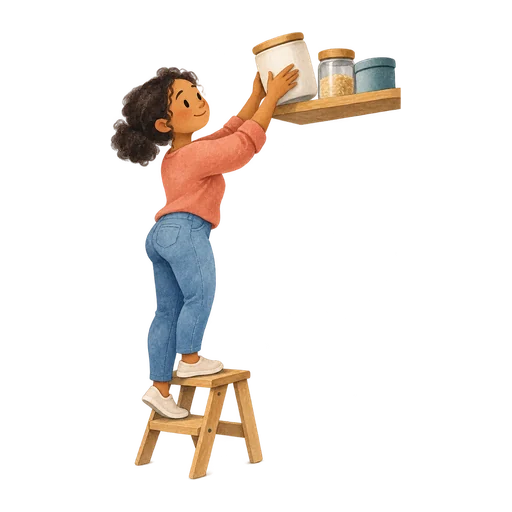
Em uma frase
Oggi non posso uscire, devo studiare.
Today I can't go out, I have to study.
Puoi aiutarmi con questo esercizio?
Can you help me with this exercise?
Non ho potuto chiamarti ieri sera.
I couldn't call you last night.
Formas da palavra (48)
| Palavra | Formas da palavra |
|---|---|
| potere | infinitive |
| possiamo | indicative · present · plural · 1st person |
| posso | indicative · present · singular · 1st person |
| potete | indicative · present · plural · 2nd person |
| puoi | indicative · present · singular · 2nd person |
| possono | indicative · present · plural · 3rd person |
| può | indicative · present · singular · 3rd person |
| potevamo | indicative · imperfect · plural · 1st person |
| potevo | indicative · imperfect · singular · 1st person |
| potevate | indicative · imperfect · plural · 2nd person |
| potevi | indicative · imperfect · singular · 2nd person |
| potevano | indicative · imperfect · plural · 3rd person |
| poteva | indicative · imperfect · singular · 3rd person |
| potemmo | indicative · past · plural · 1st person |
| potei | indicative · past · singular · 1st person |
| poteste | indicative · past · plural · 2nd person |
| potesti | indicative · past · singular · 2nd person |
| poterono | indicative · past · plural · 3rd person |
| poté | indicative · past · singular · 3rd person |
| potremo | indicative · future · plural · 1st person |
| potrò | indicative · future · singular · 1st person |
| potrete | indicative · future · plural · 2nd person |
| potrai | indicative · future · singular · 2nd person |
| potranno | indicative · future · plural · 3rd person |
| potrà | indicative · future · singular · 3rd person |
| possiamo | subjunctive · present · plural · 1st person |
| possa | subjunctive · present · singular · 1st person |
| possiate | subjunctive · present · plural · 2nd person |
| possa | subjunctive · present · singular · 2nd person |
| possano | subjunctive · present · plural · 3rd person |
| possa | subjunctive · present · singular · 3rd person |
| potessimo | subjunctive · imperfect · plural · 1st person |
| potessi | subjunctive · imperfect · singular · 1st person |
| poteste | subjunctive · imperfect · plural · 2nd person |
| potessi | subjunctive · imperfect · singular · 2nd person |
| potessero | subjunctive · imperfect · plural · 3rd person |
| potesse | subjunctive · imperfect · singular · 3rd person |
| potremmo | conditional · present · plural · 1st person |
| potrei | conditional · present · singular · 1st person |
| potreste | conditional · present · plural · 2nd person |
| potresti | conditional · present · singular · 2nd person |
| potrebbero | conditional · present · plural · 3rd person |
| potrebbe | conditional · present · singular · 3rd person |
| potemo | imperative · plural · 1st person |
| potete | imperative · plural · 2nd person |
| pozzi | imperative · singular · 2nd person |
| potendo | gerund |
| potuto | past · participle |
Notas de uso
- Use 'potere' for ability or permission; 'sapere' is for learned skills (e.g., 'so nuotare' = I can swim).
- In compound tenses, 'potere' takes 'avere' as auxiliary, even with verbs that normally use 'essere'.
- Avoid literal translations of 'could' for past ability; use 'riuscire a' or 'essere in grado di' for one-time events.
- present: posso, puoi, può, possiamo, potete, possono