Significado
to saw
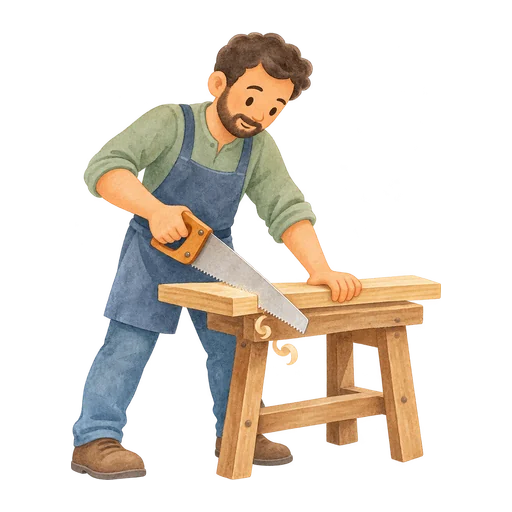
- to cut wood, metal, or stone using a saw
- to fail or reject someone in an exam (informal)
Em uma frase
Ha segato i rami secchi dell'albero in giardino.
He sawed off the dry branches of the tree in the garden.
Attento a non farti male mentre seghi quella tavola di legno.
Be careful not to hurt yourself while you saw that wooden board.
Non riusciamo a segare questo tronco con una sega a mano.
We can't saw this trunk with a hand saw.
Formas da palavra (48)
| Palavra | Formas da palavra |
|---|---|
| segare | infinitive |
| sego | indicative · present · singular · 1st person |
| seghi | indicative · present · singular · 2nd person |
| sega | indicative · present · singular · 3rd person |
| seghiamo | indicative · present · plural · 1st person |
| segate | indicative · present · plural · 2nd person |
| segano | indicative · present · plural · 3rd person |
| segavo | indicative · imperfect · singular · 1st person |
| segavi | indicative · imperfect · singular · 2nd person |
| segava | indicative · imperfect · singular · 3rd person |
| segavamo | indicative · imperfect · plural · 1st person |
| segavate | indicative · imperfect · plural · 2nd person |
| segavano | indicative · imperfect · plural · 3rd person |
| segai | indicative · past · singular · 1st person |
| segasti | indicative · past · singular · 2nd person |
| segò | indicative · past · singular · 3rd person |
| segammo | indicative · past · plural · 1st person |
| segaste | indicative · past · plural · 2nd person |
| segarono | indicative · past · plural · 3rd person |
| segherò | indicative · future · singular · 1st person |
| segherai | indicative · future · singular · 2nd person |
| segherà | indicative · future · singular · 3rd person |
| segheremo | indicative · future · plural · 1st person |
| segherete | indicative · future · plural · 2nd person |
| segheranno | indicative · future · plural · 3rd person |
| seghi | subjunctive · present · singular · 1st person |
| seghi | subjunctive · present · singular · 2nd person |
| seghi | subjunctive · present · singular · 3rd person |
Notas de uso
- Takes 'h' before 'e' and 'i' to preserve the hard /ɡ/ sound (e.g. 'seghiamo', 'seghi').
- In student slang, it colloquially means 'to fail' an exam.