Meaning
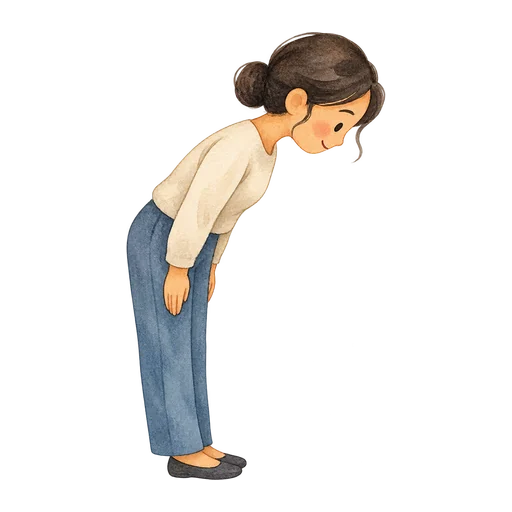
to bow, bend
- to bow (the head, body)
- to bend, incline
In a sentence
Il cavaliere inchinò il capo in segno di rispetto.
The knight bowed his head as a sign of respect.
Hai inchinato la testa per salutare?
Did you bow your head to say hello?
La pianta si inchina verso la finestra.
The plant leans toward the window.
Word forms (48)
| Word | Word forms |
|---|---|
| inchinare | infinitive |
| inchiniamo | indicative · present · plural · 1st person |
| inchino | indicative · present · singular · 1st person |
| inchinate | indicative · present · plural · 2nd person |
| inchini | indicative · present · singular · 2nd person |
| inchinano | indicative · present · plural · 3rd person |
| inchina | indicative · present · singular · 3rd person |
| inchinavamo | indicative · imperfect · plural · 1st person |
| inchinavo | indicative · imperfect · singular · 1st person |
| inchinavate | indicative · imperfect · plural · 2nd person |
| inchinavi | indicative · imperfect · singular · 2nd person |
| inchinavano | indicative · imperfect · plural · 3rd person |
| inchinava | indicative · imperfect · singular · 3rd person |
| inchinammo | indicative · past · plural · 1st person |
| inchinai | indicative · past · singular · 1st person |
| inchinaste | indicative · past · plural · 2nd person |
| inchinasti | indicative · past · singular · 2nd person |
| inchinarono | indicative · past · plural · 3rd person |
| inchinò | indicative · past · singular · 3rd person |
| inchineremo | indicative · future · plural · 1st person |
| inchinerò | indicative · future · singular · 1st person |
| inchinerete | indicative · future · plural · 2nd person |
| inchinerai | indicative · future · singular · 2nd person |
| inchineranno | indicative · future · plural · 3rd person |
| inchinerà | indicative · future · singular · 3rd person |
| inchiniamo | subjunctive · present · plural · 1st person |
| inchini | subjunctive · present · singular · 1st person |
| inchiniate | subjunctive · present · plural · 2nd person |
| inchini | subjunctive · present · singular · 2nd person |
| inchinino | subjunctive · present · plural · 3rd person |
| inchini | subjunctive · present · singular · 3rd person |
| inchinassimo | subjunctive · imperfect · plural · 1st person |
| inchinassi | subjunctive · imperfect · singular · 1st person |
| inchinaste | subjunctive · imperfect · plural · 2nd person |
| inchinassi | subjunctive · imperfect · singular · 2nd person |
| inchinassero | subjunctive · imperfect · plural · 3rd person |
| inchinasse | subjunctive · imperfect · singular · 3rd person |
| inchineremmo | conditional · present · plural · 1st person |
| inchinerei | conditional · present · singular · 1st person |
| inchinereste | conditional · present · plural · 2nd person |
| inchineresti | conditional · present · singular · 2nd person |
| inchinerebbero | conditional · present · plural · 3rd person |
| inchinerebbe | conditional · present · singular · 3rd person |
| inchiniamo | imperative · plural · 1st person |
| inchinate | imperative · plural · 2nd person |
| inchina | imperative · singular · 2nd person |
| inchinando | gerund |
| inchinato | past · participle |
Usage notes
- Usually reflexive for people: inchinarsi davanti a qualcuno. Non-reflexive often takes a direct object: inchinare il capo.
- For physical leaning, pendere or inclinare is often more natural in technical contexts; inchinare sounds more literary or deliberate.
- Past tense with essere in the reflexive form: si è inchinato/a. Non-reflexive uses avere: ha inchinato il capo.